Goodbye Covent Garden
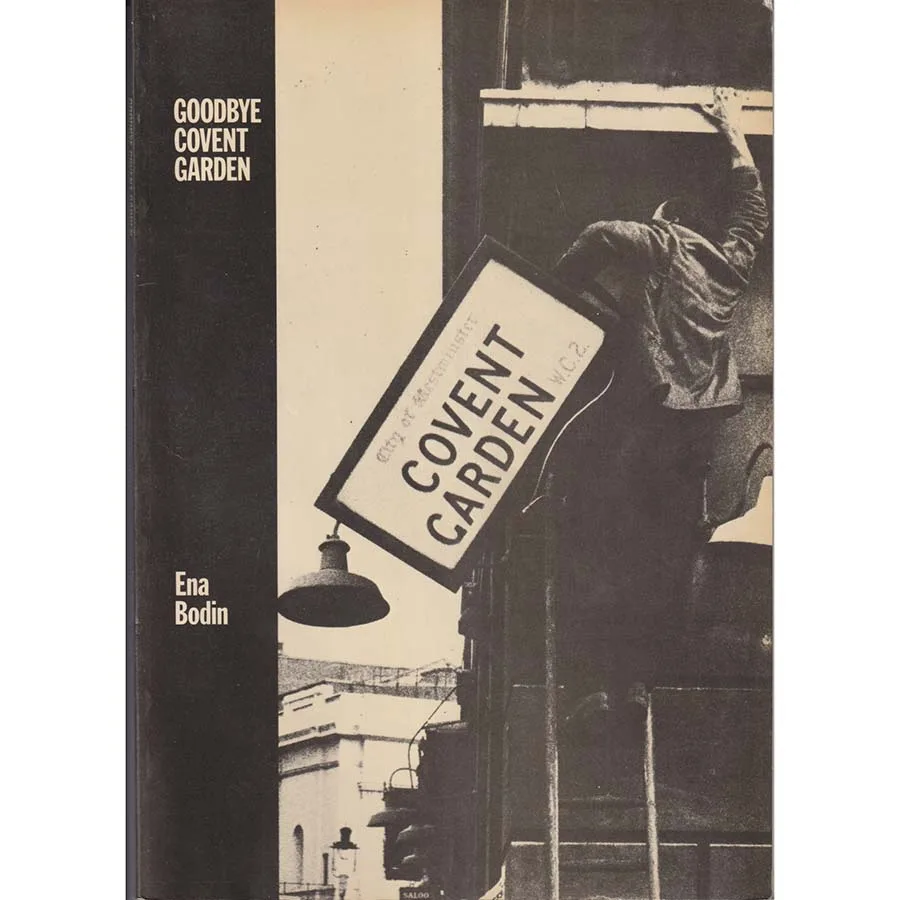
Publisher: Oxford Illustrated Press
Format: Paperback
ISBN: 0902280309
Goodbye Covent Garden by Ena Bodin, published by Oxford Illustrated Press in 1975, is a wonderfully atmospheric farewell to the old Covent Garden market at the moment when centuries of fruit, vegetables, flowers, barrows, porters, vans, shouting and general organised chaos were being removed from central London.
Before Covent Garden became associated primarily with opera, restaurants, boutiques and tourists photographing themselves beside things that used to have a practical purpose, it was a working wholesale market.
And working is very much the word.
For generations, the district woke while most of London was still asleep. Produce arrived in quantity, porters shifted impossible loads, traders negotiated prices, vehicles squeezed through streets never designed for them, and the entire place operated through a mixture of experience, routine and apparently incomprehensible shouting.
By the early 1970s, this arrangement had become increasingly difficult to maintain.
A wholesale market created in an age of horses and handcarts was now attempting to accommodate lorries, modern distribution and twentieth-century traffic while occupying some of the most valuable and congested streets in London.
Something, inevitably, had to give.
The old market finally moved out in 1974, bringing an extraordinary chapter of London life to an end.
Published the following year, Goodbye Covent Garden belongs to that fascinating category of books produced just as something familiar is disappearing.
Not fifty years later.
Not after the memories have become polished into heritage.
But while people could still remember the noise, the smells, the characters, the routines and the astonishing quantities of cabbage.
That timing gives the book much of its appeal.
Covent Garden was not preserved in amber.
It was messy.
It was dirty.
It was crowded.
It was commercially necessary.
And it was populated by people doing actual work rather than recreating historical atmosphere for visitors.
Books like this preserve the bits that redevelopment tends to remove first.
The battered vehicles.
The packing cases.
The signs.
The market porters.
The loading bays.
The shops that existed because thousands of people passed through at unreasonable hours carrying things.
And the general sense that the area belonged to a working community rather than to a marketing department.
There is also an unavoidable irony in looking back now.
The old market was moved partly because central London had become an impractical place for wholesale trading.
The buildings and streets were then transformed into one of London’s most successful leisure and tourist districts.
So the vegetables left.
The restaurants arrived.
And eventually people began paying considerably more to consume the same vegetables.
Progress is complicated.
For readers interested in London history, markets, social history, urban change, architecture or documentary photography, this is exactly the sort of book that becomes more interesting with every passing decade.
In 1975 it documented something recently lost.
Today it documents a city that has largely vanished.
That is the secret life of old illustrated books.
They begin as contemporary publications.
Then somebody leaves them on a shelf for fifty years.
Suddenly they become evidence.
Condition: Good. A sound used copy with normal signs of age and handling. Published in 1975, it has now survived long enough for the “old Covent Garden” of the title to feel genuinely historical rather than merely recently departed.
ISBN: 0902280309.
A fascinating visual and historical farewell to the working Covent Garden market, capturing the people, streets and everyday clutter of a part of London just before redevelopment transformed it into something considerably cleaner, quieter and more expensive.
Sold by Crappy Old Books — preserving old London one obsolete loading bay at a time.
Keep browsing: See more History books Other books by Ena Bodin